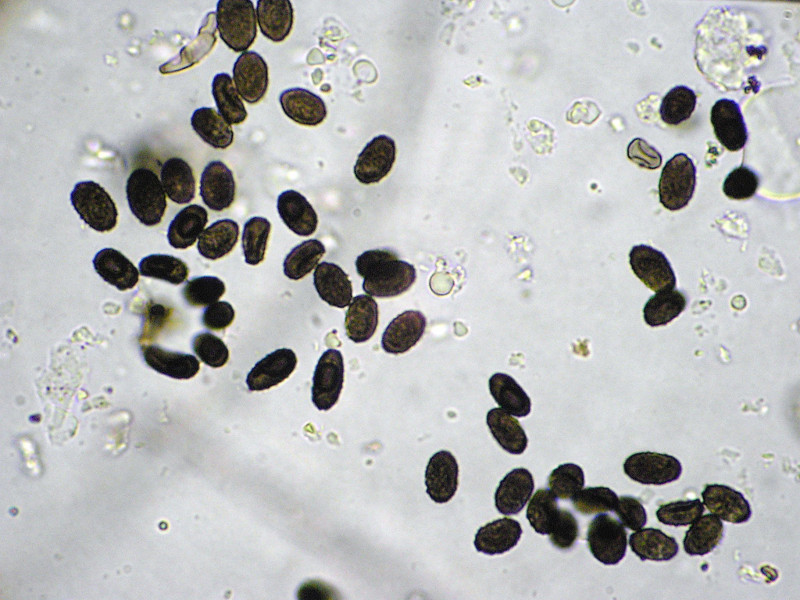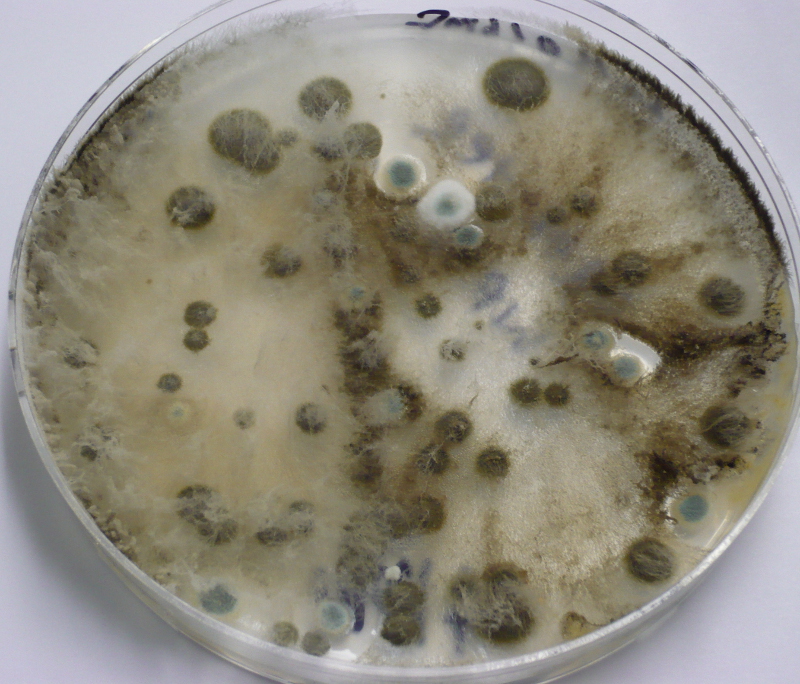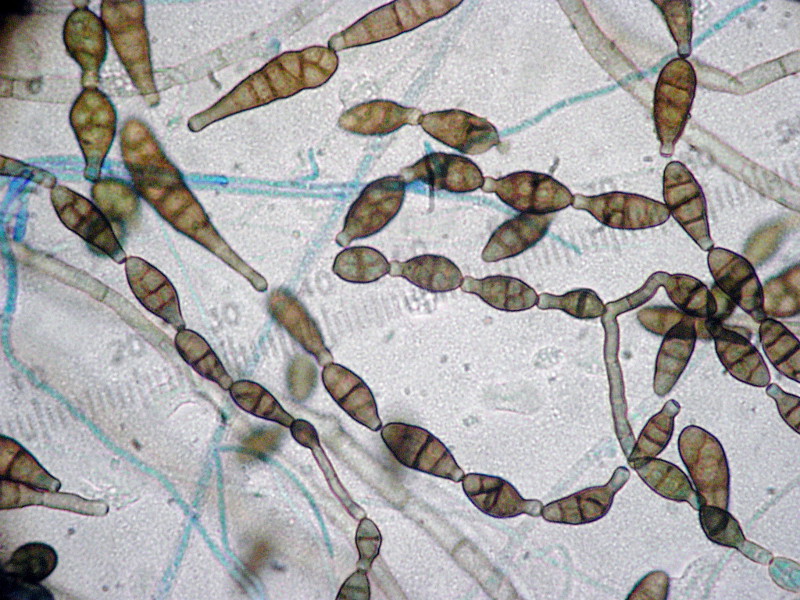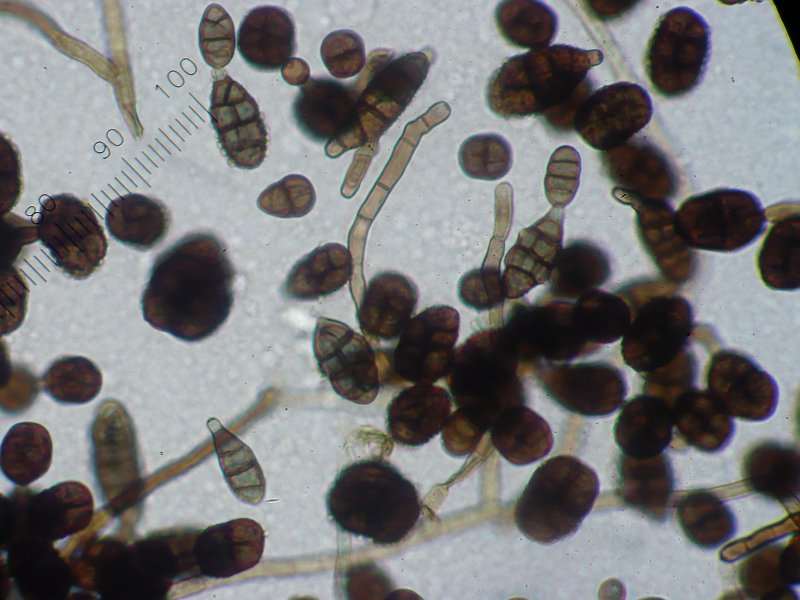
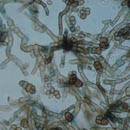
There are about 150 different types of household mold (also spelt as mould). This is a short list of the more common molds that grow in households. Since household mold is incredibly diverse, even within the individual species, it isn’t a complete picture, but it may help in explaining why “black mold” isn’t synonymous with dangerous mold or with Stachybotrys.
Some common types of household mold
Note: See mold hazard classes for a discussion of the method we’re using to classify molds on this page.
Cladosporium
(pronounced ‘clad-oh-spore-ee-um’)
Cladosporium is a very common mold. It can appear green, brown, grey or black on surfaces. It is classified as either Hazard Class B or C, depending on the species – i.e., allergic reactions are generally the only concern with Cladosporium. It can grow in many places, including walls, wood, dust, and insulation.
Aspergillus
(pronounced ‘as-per-jill-us’)
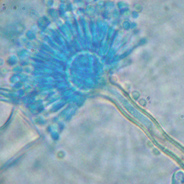
Aspergillus is another common mold. It can appear grey, brown, yellow, green, white, or black, and is generally Hazard Classes A or B. Some can cause infection in people with weak immune systems, some can make toxins, while others only cause allergic reactions. Aspergillus can grow on walls, insulation, paper products, soil, clothing, and many other places.
Penicillium
(pronounced ‘pen-ih-sill-ee-um’)
Penicillium is a familiar name, because modern antibiotics were discovered thanks to a species of Penicillium long ago. However, that doesn’t mean that the genus can’t be hazardous. It can appear blue, green, or white, and is generally classified as B or C. It can be found on foods, such as cheese and fruit, or in the walls, the insulation, and other places.

Ulocladium
(pronounced ‘you-low-clad-ee-um’)
Ulocladium usually looks black or grey. It falls into hazard classes B and C, and tends to grow in damp areas. It can be found on walls, around windows, in dusty areas, and other places.
Acremonium
(pronounced ‘ack-ri-moan-ee-um’)
Acremonium is often found on insulation and drywall/sheetrock, although it can be found in many other areas, too – it grows in damp places. It can appear white, grey or brown, and various species are found in all three hazard classes.
Stachybotrys
(pronounced ‘stack-ee-bot-riss’)
Stachybotrys is the infamous black mold that made the news in association with ill health effects many years ago. It needs a very damp area to grow, and is considered a Hazard Class A mould, as it can create toxins. It looks black on surfaces.

Alternaria
(pronounced ‘all-ter-nair-ee-uh’)
Alternaria looks similar to Ulocladium under a microscope. It can appear black or grey on surfaces. It is classified as a Hazard Class B mould, and has been known to cause various allergic reactions. It can grow on walls, dusty areas, around windows, damp areas, in soil, on plants, and in various other places.
Effluorescence
An important side note is that sometimes what you’re looking at is actually effluorescence rather than mold. This is a deposit of white salts, especially on concrete, where water has penetrated and left a salt deposit on the surface. It can be difficult to tell the difference.
If you want to find out whether you have a hazardous mold, a harmless mold, or just effluorescence or perhaps just soot, you can order our Household Mold Test Kit. Rush results can be available in as little as 24 hours after receiving the sample.


Latest posts by Jackson Kung'u (see all)
- Symptoms of mold exposure - September 4, 2015
- Mildew and Moisture in Homes - September 3, 2015
- Mould Removal - September 2, 2015